
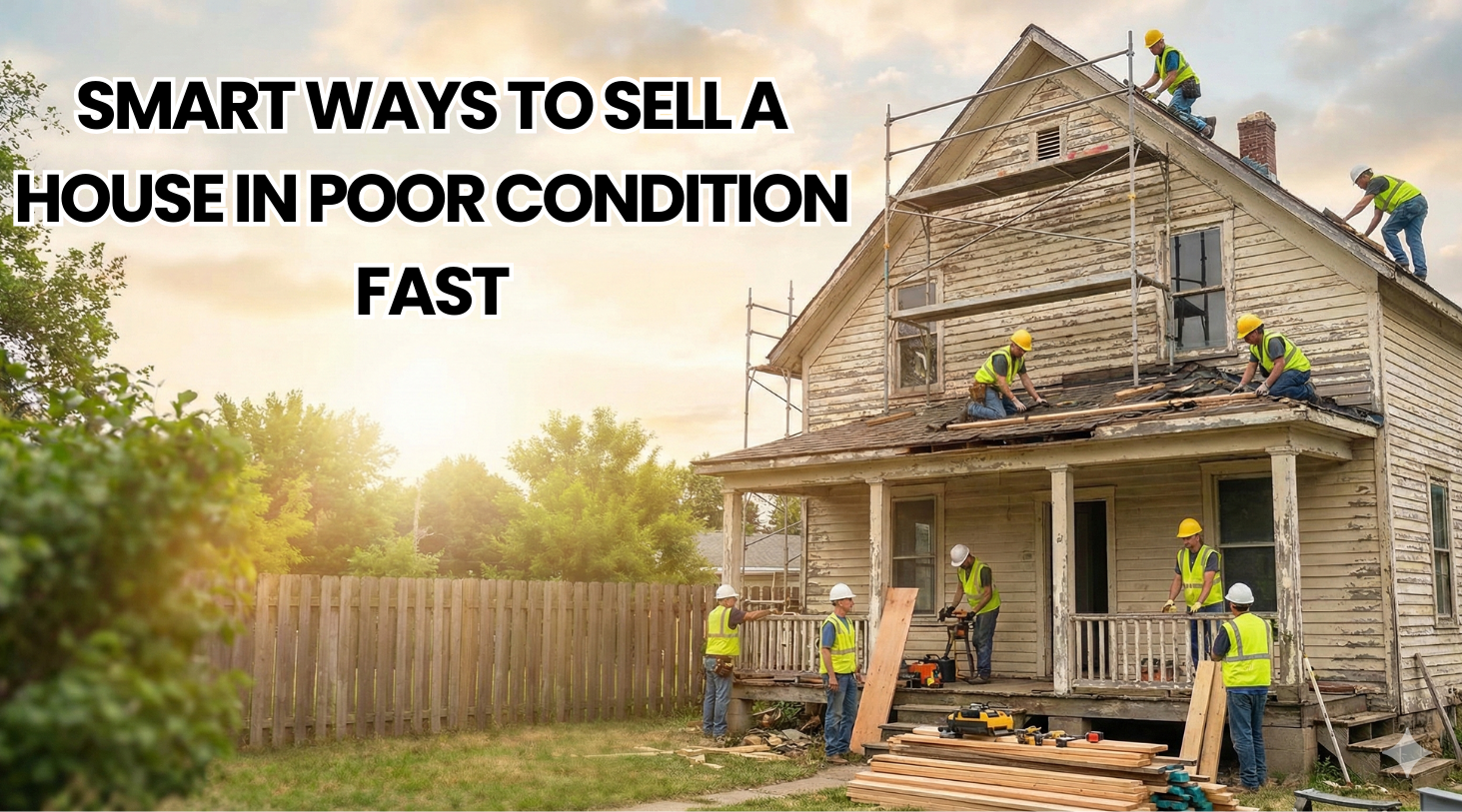
Selling a house in poor condition can feel overwhelming, especially when you’re dealing with damage, outdated systems, or repairs you don’t have the time or budget to handle. The good news? Homes in less-than-perfect shape can absolutely be sold — and often much faster than people expect.
Whether the property is inherited, distressed, or simply too costly to fix, there are practical strategies that can help you sell quickly without unnecessary stress. This guide breaks down your best options and shows how to turn a challenging situation into a manageable and even profitable outcome.
Can You Sell a House in Poor Condition?
Yes. Homes in poor condition sell every single day.
In real estate, “poor condition” can refer to anything from cosmetic issues (old carpets, peeling paint, outdated kitchens) to structural concerns (roof leaks, foundation issues, electrical or plumbing problems).
Most homes fall into one of two categories:
Cosmetic Damage
These issues impact appearance but not safety:
- Worn flooring
- Old appliances
- Outdated bathrooms
- Minor drywall patches
Structural Damage
These issues impact the home’s integrity or safety:
- Water damage or mold
- Foundation cracks
- Older roofs with leaks
- Electrical or plumbing hazards
Both types can be sold—the strategy depends on the extent of the damage.
Have questions about what buyers look for? We’re here to help you sort through it all.
Contact us for guidance.
Top Reasons People Sell Distressed Properties
Every homeowner’s story is different, but these are some of the most common reasons people choose to sell homes in less-than-perfect condition:
- Inherited property that needs significant repairs
- Foreclosure concerns where selling quickly helps protect equity
- Cost of repairs is too high to take on
- Rental gone wrong, causing damage or neglect
- Major life changes — downsizing, relocation, divorce
- Health or financial constraints limiting the ability to manage repairs
Selling a house in bad condition fast isn’t just about urgency — it’s about finding the right strategy for your circumstances.
What Buyers Look for in Fixer-Uppers
Not all buyers shy away from homes with issues. Some seek them out.
Real Estate Investors
Investors often look for:
- Good resale potential
- Rental income opportunities
- Properties priced appropriately for the renovation work needed
DIY Buyers
These buyers love:
- The chance to customize a home affordably
- Getting into a neighborhood they otherwise couldn’t afford
- Sweat-equity potential
What Motivates All Fixer-Upper Buyers
- Location
- Price
- Renovation potential
- Long-term value
If you’re unsure which buyer type your home might attract, our team can provide insight into what the local market is responding to right now.
Common Issues in Poor-Condition Homes
Structural Problems
These are the issues most sellers worry about:
- Foundation cracks
- Roof damage
- Outdated or unsafe electrical systems
- Failing plumbing
Honest disclosure is essential. It protects you legally and helps ensure smoother sales.
Water Damage
One of the most common — and most visible — concerns:
- Mold or mildew
- Old water heaters or failed plumbing
- Storm or basement flooding
While you don’t need to complete major repairs, addressing standing water, improving airflow, or removing damaged debris can help the home show better during the sale.
5 Best Ways to Sell a House in Poor Condition
There’s no one-size-fits-all approach — the best method depends on your timeline, financial goals, and appetite for repairs.
1. Sell As-Is to a Cash Buyer
This is one of the fastest ways to sell a distressed home.
Pros:
- No repairs
- No inspections or appraisals
- Fast closing — sometimes in days
Cons:
- Lower offer price than market listings
Not sure whether a cash sale is right for you? We’re happy to walk you through the pros and cons. Reach out for personalized advice.
2. List on the Open Market With ‘Fixer-Upper’ Positioning
If time isn’t your biggest concern, you may earn more by listing publicly.
Strong listing language includes terms like:
- “Investment opportunity.”
- “Great bones.”
- “Investor special.”
Curb appeal also helps—small, clean touches go a long way, even when the inside needs work.
3. Auction the Property
Auctions work best when:
- You need to sell quickly
- You’re open to a potentially lower sale price
- Your home has significant investor appeal
The process can be fast-paced, but it creates competition among buyers who expect homes to need work.
4. Sell to a Local Real Estate Investor
Investors often:
- Close quickly
- Accept properties with major defects
- See long-term value beyond the current condition
If you’re considering selling to an investor, we can help position your property effectively and connect you with qualified buyers. Reach out for a free seller’s consultation.
5. Convert to a Rental & Sell Later
If you’re not ready to sell right now, renting can:
- Generate income
- Allow the home to appreciate
- Give you time to make repairs over time
Our team also offers property management resources for homeowners who want to explore renting before selling.
How Much Can You Expect to Make?
Your final sale price depends on several factors:
- Extent of damage
- Local market conditions
- Buyer demand for fixer-uppers
- Whether you sell as-is or list publicly
A fair pricing strategy is essential. The price is too high, and you lose buyers. The price is too low, and you leave money on the table.
If you want a realistic idea of what your home could sell for in its current condition, we can prepare a local, data-driven valuation for you.
What to Avoid When Selling a Poor-Condition House
- Don’t hide known damage. Full disclosure protects you legally.
- Don’t overspend on unnecessary repairs. Focus on cleanliness and safety only.
- Don’t ignore zoning or future land-use potential. This can be a selling point for investors.
Documents and Disclosures Needed
When selling a distressed property, documentation matters:
- Required local disclosures
- Any known structural or water-related issues
- “As-is” agreement when applicable
- Permits for past work (if available)
Having the paperwork prepared in advance helps prevent delays at closing.
Real Estate Consulting Can Make a Difference
Choosing whether to repair, sell as-is, or rent out a distressed property is a big decision. Having guidance from professionals who understand both sales and investment strategy can save you time, money, and stress.
The Perry Team helps homeowners evaluate:
- Whether to sell, repair, or rent
- How to price the home
- Which buyers to target
- How to prepare the property for the fastest sale
Have questions about which path makes the most sense? We’re here to help you sort through it at your own pace. Contact us today.
Final Tips to Speed Up the Sale
A few simple steps can help your home look its best — even in poor condition:
- Clean what you can
- Improve lighting and remove debris
- Take honest photos but show potential
- Allow flexible viewer access for interested buyers
Small efforts can lead to better offers and quicker sales.
Selling a house in poor condition doesn’t have to be stressful. With the right strategy, you can attract serious buyers, avoid unnecessary repair costs, and move forward with confidence — even if your home needs significant work.
Whether you’re considering a cash offer, listing on the open market, or turning the property into a rental, we are here to provide guidance rooted in experience, honesty, and local expertise.
The Perry Team
Two agents. One team. Always in your corner.